When a Small Skin Mole Starts Causing Bigger Concerns
Sarah had a small mole on her shoulder for years. It never caused any discomfort, and she barely noticed it. Over time, however, it began catching on clothing straps and occasionally became irritated after exercise. Although the mole wasn’t painful, the repeated friction made her wonder whether it was worth having it assessed.
Stories like Sarah’s are common. Many adults develop benign moles throughout their lives. Most are harmless and remain unchanged, yet some become bothersome due to their location, appearance, or repeated irritation. Knowing when a mole is simply a cosmetic concern and when it deserves professional attention can help people make informed decisions about their skin health.
Why Benign Moles Deserve Regular Attention
A benign mole is a non-cancerous growth formed by clusters of pigment-producing cells known as melanocytes. These skin growths can appear anywhere on the body and may vary in size, colour, and shape.
While most benign moles do not require treatment, there are several reasons why people choose to have them evaluated. In some cases, individuals explore options for the safe removal of benign skin moles when irritation, cosmetic concerns, or daily discomfort begin affecting their quality of life.
Frequent irritation from clothing or jewellery
Discomfort during shaving or grooming
Cosmetic concerns affecting confidence
Changes in appearance that require professional assessment
Difficulty monitoring moles located on the back or scalp
Routine skin awareness plays an important role in identifying changes that may warrant medical evaluation. Dermatologists often encourage individuals to become familiar with their normal skin markings so that unusual developments can be detected early.
Recognising Changes That Should Not Be Ignored
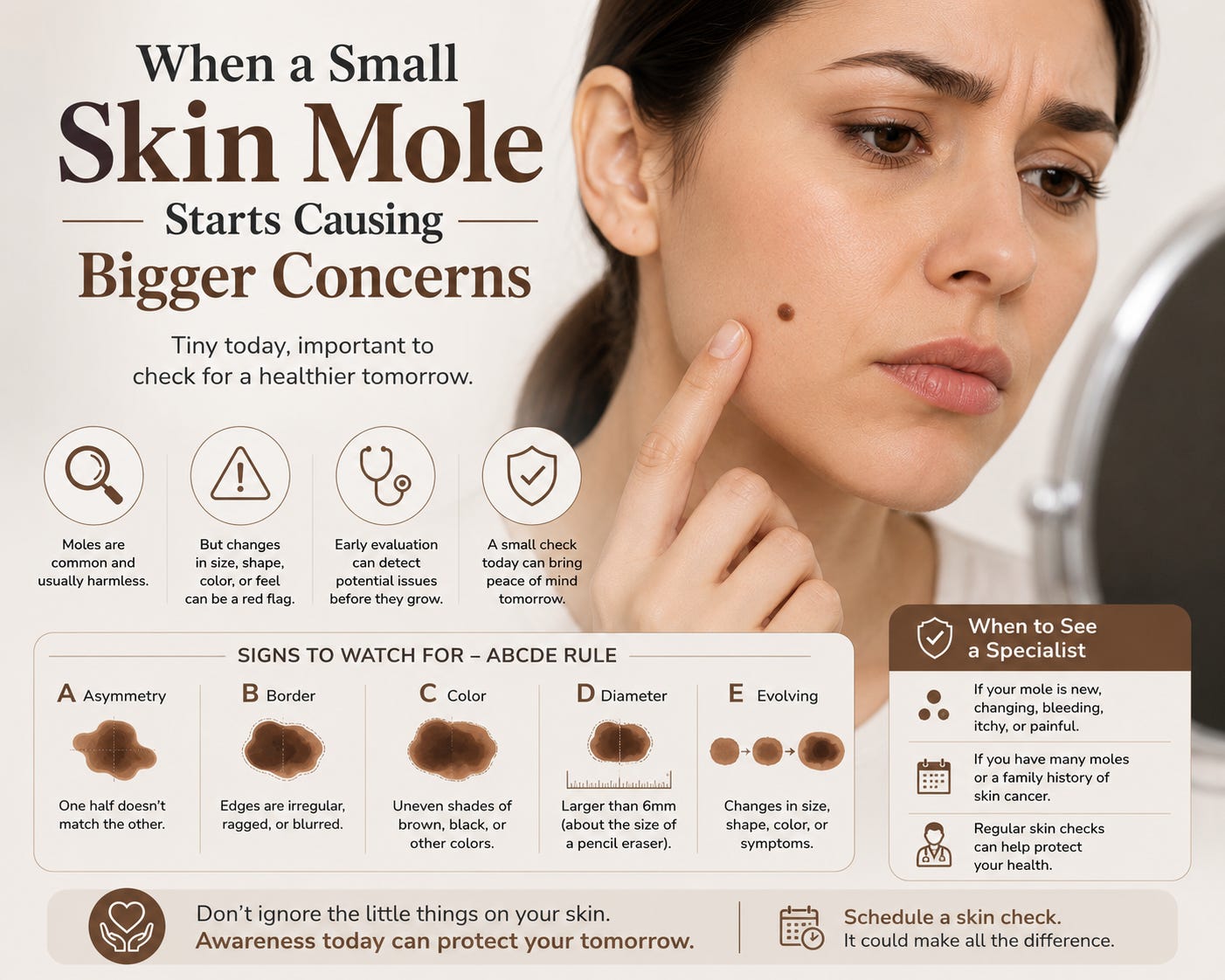
Healthcare professionals commonly use the ABCDE method when assessing pigmented skin lesions:
A – Asymmetry: One half differs from the other.
B – Border: Edges appear irregular or poorly defined.
C – Colour: Multiple colours or uneven pigmentation are present.
D – Diameter: The lesion grows larger than expected.
E – Evolving: Noticeable changes occur over time.
Although these signs do not automatically indicate skin cancer, they can signal the need for further examination by a qualified medical professional. Conditions such as melanoma often require early diagnosis, making regular observation especially valuable.
Modern Approaches to Managing Benign Skin Lesions
Advances in dermatological and cosmetic skin treatments have expanded the options available for addressing benign skin growths. Depending on the type, size, and location of the lesion, practitioners may recommend different techniques.
Common approaches include:
Cryotherapy
Surgical excision
Shave removal
Laser-based procedures
Electrosurgery in selected cases
The suitability of any treatment depends on a thorough assessment. Factors such as skin type, healing characteristics, and lesion structure all influence the recommended approach.
For many people, recovery is relatively straightforward. Temporary redness, mild scabbing, and minor sensitivity are often part of the normal healing process. Following aftercare instructions carefully can help reduce complications and support optimal skin recovery.
Key Takeaways
Benign moles are extremely common and are usually harmless. Even so, they can become a source of irritation, cosmetic concern, or uncertainty when changes occur. Regular skin checks, awareness of the ABCDE warning signs, and professional assessment when needed remain essential parts of responsible skin care.
As non-surgical and minimally invasive treatment options continue to evolve, individuals have more choices than ever when considering how to manage benign skin lesions while maintaining healthy skin and confidence in their appearance.